
The main purpose of a Slip Ring is to transfer electrical power and signals between a stationary structure and a rotating component while allowing continuous rotation. It is widely used in industrial equipment where conventional cables cannot provide a reliable connection during continuous rotation.
How Does a Slip Ring Work?
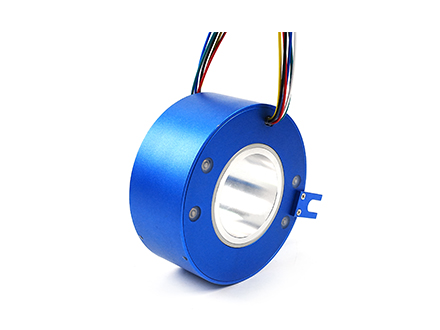
A typical slip ring contains conductive rings connected to the rotating assembly and stationary electrical contacts that maintain contact with the rings. As the shaft or equipment rotates, the conductive interface continues transmitting electricity or signals.
This design allows the rotating equipment to operate continuously without twisting or repeatedly winding electrical cables.
What Is the Main Function of a Slip Ring?
The primary function is to maintain electrical connectivity during rotation. Depending on the design, a slip ring can transmit power, control signals, sensor signals, data, or a combination of different circuits.
Power Transmission
Slip Rings can transfer electrical power to rotating components. The required current and voltage depend on the application and equipment design.
Signal Transmission
Some slip rings are designed for low-current signals, sensor connections, control signals, or communication circuits. These configurations require appropriate contact and electrical design to maintain reliable signal transmission.
Continuous Rotation
Without a slip ring, cables connected to a continuously rotating component can become twisted, stressed, or damaged. A slip ring provides an alternative electrical connection that allows continuous rotation.
Where Are Slip Rings Used?
Slip rings are used across many industries and types of rotating equipment.
| Application | Purpose |
|---|---|
| Wind Turbines | Power and signal transmission in rotating systems |
| Industrial Machinery | Electrical connection for rotating equipment |
| Cable Reels | Maintains electrical connection during reel rotation |
| Robotics | Transfers power and signals through rotating joints |
| Rotary Tables | Provides electrical transmission during table rotation |
| Medical Equipment | Transfers power and signals through rotating assemblies |
| Radar Systems | Supports electrical and signal transmission during antenna rotation |
What Types of Slip Rings Are Available?
Slip rings can be designed in different configurations depending on the equipment requirements.
Through-bore slip rings: Designed with a central hollow shaft for applications requiring cables, shafts, or other components to pass through the center.
Capsule Slip Rings: Compact designs suitable for equipment with limited installation space.
High-current slip rings: Designed to handle higher electrical current for power transmission applications.
Signal slip rings: Optimized for transmitting control, sensor, or communication signals.
Customized slip rings: Designed according to specific mechanical dimensions and electrical requirements.
What Should You Consider When Choosing a Slip Ring?
The purpose of a slip ring determines which specifications are most important. Before selecting a model, consider the following factors.
Number of Circuits
Determine how many independent power or signal channels need to pass through the rotating interface.
Current and Voltage
The rated current and voltage should match the electrical requirements of the equipment. Power circuits and signal circuits may require different contact designs.
Rotation Speed
Check the required rotational speed and operating cycle. Continuous rotation and high-speed applications can place additional demands on the contact system.
Size and Installation
The outer diameter, shaft configuration, mounting method, and available installation space should be considered during selection.
Environmental Conditions
Temperature, humidity, dust, vibration, and other environmental conditions can affect slip ring performance. The housing and protection level should be selected according to the actual working environment.
Service Life
For industrial applications, service life and maintenance requirements are important considerations. Contact materials and structural design can influence wear and long-term reliability.
Why Are Slip Rings Important for Rotating Equipment?
Many modern machines require electrical power and data transmission while rotating. A slip ring provides a practical connection between stationary and rotating systems without limiting the movement of the equipment.
This makes slip rings an important component in applications where continuous rotation and electrical transmission must work together.
Custom Slip Ring Solutions
Different machines have different electrical and mechanical requirements. A customized slip ring can be designed according to the required circuit number, current, voltage, rotational speed, dimensions, signal type, connector configuration, and environmental conditions.
For equipment manufacturers and system integrators, working with a slip ring manufacturer during the design stage can help ensure that the electrical and mechanical interfaces are properly matched.
Conclusion
The purpose of a slip ring is to maintain the transmission of electrical power and signals between stationary and rotating components. By allowing continuous rotation without cable twisting, slip rings help rotating equipment achieve reliable electrical connectivity.
From wind turbines and industrial machinery to robotics and radar systems, the appropriate slip ring should be selected according to the specific electrical, mechanical, and environmental requirements of the application.