
Temperature is one of the most important specifications when selecting a Slip Ring for demanding industrial equipment. A conventional slip ring may work reliably under normal operating conditions, but equipment exposed to continuous heat requires a different approach. A High Temperature Slip Ring is specifically designed to maintain electrical transmission and mechanical performance in elevated-temperature environments.
However, there is no single temperature rating that applies to every high temperature slip ring. The actual temperature capability depends on the materials, insulation system, contact technology, bearing configuration, mechanical structure, and application requirements. Therefore, understanding temperature ratings is essential when choosing a suitable slip ring.
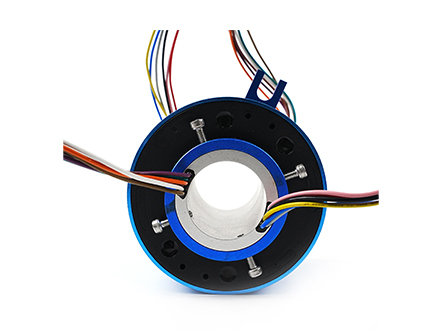
What Is the Temperature Rating of a High Temperature Slip Ring?
The temperature rating of a High Temperature Slip Ring refers to the temperature range within which the slip ring is designed to operate reliably. Different products may have significantly different temperature capabilities.
Some high-temperature Slip Rings are designed for moderately elevated industrial temperatures, while specialized designs can be engineered for much more demanding environments. The actual operating temperature should always be confirmed with the manufacturer based on the complete system conditions.
It is also important to distinguish between ambient temperature and the actual temperature surrounding the slip ring components. Heat generated by electrical current, friction, nearby heating elements, and the rotating machine itself can influence the internal temperature of the slip ring.
Why Does Temperature Matter for Slip Rings?
High temperature can affect almost every component inside a rotary electrical connector. If a slip ring is used outside its recommended temperature range, its electrical and mechanical performance may gradually deteriorate.
The main effects of excessive temperature include:
Increased contact resistance
Accelerated contact wear
Insulation degradation
Lubricant deterioration
Bearing performance changes
Thermal expansion
Electrical signal instability
Reduced operating life
For this reason, temperature should be considered together with current, voltage, speed, signal type, and environmental conditions when selecting a high temperature rotary connector.
High Temperature Slip Ring Temperature Ranges
High-temperature Slip Rings can be designed for different operating temperature levels. The exact rating depends on the product design and application.
| Temperature Level | Typical Consideration | Potential Applications |
|---|---|---|
| Moderately High Temperature | Requires improved thermal resistance compared with standard slip rings | Industrial heating and processing equipment |
| High Temperature | Requires specialized insulation, contact and mechanical design | Hot rollers, thermal machinery and testing equipment |
| Extreme Temperature | Requires application-specific engineering and material selection | Specialized industrial, aerospace and research equipment |
These categories are intended as general engineering guidance rather than universal temperature specifications. The manufacturer's tested operating range should always be used for final product selection.
What Determines the Maximum Temperature of a Slip Ring?
1. Contact Materials
Contact materials have a direct influence on electrical stability and wear at elevated temperatures. Heat can change the electrical and mechanical properties of contact surfaces, especially when the slip ring operates continuously.
For this reason, high temperature slip ring manufacturers select contact materials according to the expected temperature, current, voltage, rotational speed, and required service life.
2. Insulation Materials
The insulation system must maintain adequate dielectric strength and mechanical stability at the operating temperature.
If the insulation material is not suitable for the temperature environment, it may become brittle, deform, or lose electrical performance. High-temperature-resistant insulation materials are therefore important for specialized slip ring designs.
3. Bearing Design
The bearing system affects the mechanical reliability of a rotating electrical connector. Temperature can influence bearing clearance, lubricant performance, and material expansion.
For continuous high-temperature operation, the bearing configuration should be evaluated according to both rotational speed and temperature. A suitable design can help maintain stable rotation while reducing premature mechanical wear.
4. Lubrication
Lubrication is another important consideration. Excessive temperature may reduce lubricant viscosity or accelerate lubricant degradation.
Depending on the application, the manufacturer may need to select an appropriate bearing and lubrication solution that can operate within the required temperature range.
5. Thermal Expansion
When a slip ring heats up, different materials may expand at different rates. This thermal expansion can influence contact pressure, mechanical tolerances, and internal alignment.
A properly engineered High Temperature Slip Ring takes these effects into consideration during material selection and mechanical design.
How Does High Temperature Affect Electrical Performance?
Electrical performance can change as temperature increases. One important factor is contact resistance.
If the contact resistance increases excessively, the slip ring may generate additional heat during operation. This can create a cycle in which higher temperature causes increased resistance and increased resistance generates additional heat.
Therefore, thermal management and appropriate contact design are important for applications involving continuous current transmission at elevated temperatures.
Can a High Temperature Slip Ring Transmit Signals?
Yes. Depending on the design, a High Temperature Slip Ring can be configured to transmit not only electrical power but also various control and sensor signals.
For example, specialized designs may be used for:
Thermocouple signals
RTD signals
Temperature sensor signals
Control signals
Low-current electrical signals
Power transmission
When transmitting sensitive signals in a high-temperature environment, the design needs to consider electrical noise, insulation, contact resistance, signal integrity, and the compatibility of the sensor and slip ring.
High Temperature Slip Rings for Hot Rollers
Hot rollers are a typical application where temperature can become an important design factor. During continuous rotation, the slip ring may need to transmit electrical power or temperature-related signals while being exposed to heat generated by the roller system.
A suitable High Temperature Slip Ring can help maintain electrical continuity between the stationary and rotating parts of the equipment.
When selecting a slip ring for a hot roller, engineers should consider the actual temperature at the slip ring installation point rather than simply using the temperature of the roller surface.
High Temperature Slip Rings for Heating Equipment
Rotating heating equipment may require simultaneous transmission of power, control signals, or temperature sensor signals. These systems can create challenging thermal conditions for electrical connectors.
A high-temperature rotary electrical connector can be designed around the actual heating temperature, rotational speed, circuit requirements, and installation dimensions.
How to Choose the Right Temperature Rating?
Choosing the correct temperature rating requires more than looking at the highest possible temperature listed in a product catalog.
Before selecting a High Temperature Slip Ring, provide the manufacturer with the following information:
Normal operating temperature
Maximum operating temperature
Temperature fluctuation range
Continuous or intermittent operation
Rated current
Rated voltage
Rotational speed
Number of circuits
Signal types
Installation dimensions
Environmental conditions
Expected service life
For example, a slip ring operating continuously at an elevated temperature may require a different design from one exposed to high temperatures for only a few minutes during an intermittent production cycle.
Why Custom High Temperature Slip Rings May Be Necessary
Many high-temperature applications have unique mechanical and electrical requirements. Standard slip rings may not always provide the required combination of temperature resistance, circuit configuration, dimensions, speed, current, and signal transmission.
In these cases, a Custom High Temperature Slip Ring can be developed according to the equipment requirements.
Customization may involve:
Number of electrical circuits
Rated current and voltage
Operating temperature
Outer diameter and length
Mounting structure
Contact materials
Insulation system
Thermocouple or RTD signal transmission
Connector configuration
Special environmental requirements
Frequently Asked Questions
What is the maximum temperature a High Temperature Slip Ring can handle?
There is no universal maximum temperature. The temperature capability depends on the specific design, materials, insulation, bearings, and application. Always confirm the tested operating range with the manufacturer.
Can a standard slip ring be used at high temperatures?
Only when the actual temperature remains within the manufacturer's specified operating range. If the temperature exceeds that range, a high-temperature design should be considered.
Can high temperature slip rings transmit thermocouple signals?
Yes. Specialized designs can be configured for thermocouple and other temperature sensor signals, depending on the required electrical characteristics and operating environment.
Does higher temperature reduce slip ring life?
Excessive temperature can accelerate material degradation, contact wear, insulation aging, and bearing or lubricant deterioration. A correctly designed high-temperature slip ring can help reduce these risks.
Conclusion
The temperature capability of a High Temperature Slip Ring depends on its complete engineering design rather than a single component. Contact materials, insulation, bearings, lubrication, thermal expansion, current, speed, and signal requirements all influence the final operating temperature.
For this reason, the best way to select a high-temperature slip ring is to define the complete operating environment first and then choose or customize a design around those requirements.
If your equipment operates under elevated temperatures and requires continuous rotary power or signal transmission, provide the operating temperature, electrical specifications, rotational speed, dimensions, and application details to a professional slip ring manufacturer. A properly matched solution can provide stable transmission and reliable long-term operation in demanding environments.