
Slip Rings are widely used in rotating equipment to transfer electrical power and signals between stationary and rotating components. While standard Slip Rings can meet the requirements of many conventional applications, they may not be suitable for equipment operating in high-temperature environments. In applications involving heating systems, hot rollers, thermal processing equipment, aerospace systems, and other extreme operating conditions, a High Temperature Slip Ring can provide better reliability and electrical performance.
Understanding the differences between a high temperature slip ring and a standard slip ring is important when selecting a rotary electrical transmission solution. The operating temperature, contact materials, insulation system, bearing design, electrical characteristics, and application environment should all be considered before making a decision.
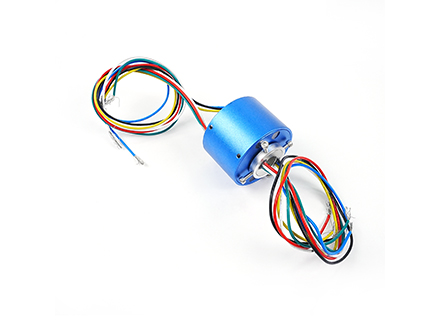
What Is a High Temperature Slip Ring?
A High Temperature Slip Ring is a rotary electrical connector designed to maintain stable power or signal transmission while operating at elevated temperatures. Unlike conventional Slip Rings, high temperature models are specifically engineered with materials and components that can withstand increased thermal stress.
Depending on the design and application requirements, a high temperature slip ring may be used in equipment operating at temperatures significantly above the normal range of standard rotary connectors.
Typical applications include heating equipment, hot rollers, thermal processing machines, testing equipment, industrial automation systems, and specialized machinery that requires continuous electrical transmission during rotation.
What Is a Standard Slip Ring?
A standard slip ring is designed to transfer electrical power, control signals, or data between stationary and rotating parts under conventional operating conditions. It is commonly used in industrial machinery, automation equipment, robotics, packaging machines, rotary tables, and other rotating systems.
Standard Slip Rings are suitable when the surrounding temperature remains within the normal operating range specified by the manufacturer. However, when the equipment operates in a high-temperature environment, the materials used in a conventional slip ring may experience accelerated aging, increased contact resistance, or reduced service life.
High Temperature Slip Ring vs Standard Slip Ring
| Feature | High Temperature Slip Ring | Standard Slip Ring |
|---|---|---|
| Operating Environment | Designed for elevated-temperature environments | Designed for conventional temperature conditions |
| Thermal Resistance | Higher thermal resistance | Generally lower thermal resistance |
| Insulation Materials | High-temperature-resistant insulation may be used | Conventional insulation materials |
| Contact Materials | Selected according to temperature and electrical requirements | Designed for standard operating conditions |
| Application | Heating equipment, hot rollers, thermal processing and other high-temperature machinery | General industrial and automation equipment |
| Design Requirements | Requires additional consideration of thermal expansion and heat resistance | More conventional mechanical and electrical design |
1. Operating Temperature
The most obvious difference between the two types of slip rings is their operating temperature range. A standard slip ring is normally designed for common industrial environments, while a High Temperature Slip Ring is developed for applications where the surrounding temperature or equipment temperature is considerably higher.
High temperatures can affect electrical insulation, contact resistance, bearings, lubricants, and mechanical components. Therefore, selecting a slip ring according to the actual operating temperature is essential for maintaining long-term reliability.
2. Contact Material Selection
The electrical contacts are one of the most important components of a slip ring. Temperature can influence contact resistance, wear rate, oxidation, and electrical stability.
For high-temperature applications, the contact materials and contact structure need to be selected according to the required temperature, current, voltage, rotational speed, and signal type. A properly designed High Temperature Slip Ring can maintain more stable electrical contact under demanding conditions.
3. Insulation System
Electrical insulation is another important difference. Conventional insulation materials may gradually lose their electrical or mechanical properties when continuously exposed to excessive heat.
High-temperature slip ring designs may use insulation materials with better thermal resistance to maintain electrical isolation between circuits. This is especially important when the slip ring contains multiple power circuits or sensitive signal channels.
4. Thermal Expansion
Different materials expand at different rates when exposed to heat. Repeated heating and cooling cycles can therefore create mechanical stress inside a rotary electrical connector.
A High Temperature Slip Ring needs to consider thermal expansion during the mechanical and electrical design process. Proper material selection and structural design can help reduce the impact of temperature fluctuations on contact stability and mechanical performance.
5. Bearing and Lubrication Requirements
Bearings are also affected by temperature. Excessive heat can change lubricant viscosity and accelerate lubricant degradation, which may eventually affect rotational performance and service life.
For high-temperature applications, bearing selection and lubrication methods should therefore be evaluated together with the required operating temperature. The actual temperature rating should always be confirmed with the slip ring manufacturer before installation.
When Should You Choose a High Temperature Slip Ring?
A High Temperature Slip Ring should be considered when the operating environment exceeds the recommended temperature range of a conventional slip ring or when the rotating equipment is exposed to continuous thermal stress.
Typical situations include:
Rotating heating equipment
Hot roller systems
Thermal processing machinery
High-temperature testing equipment
Industrial furnaces and related equipment
Specialized manufacturing machinery
Aerospace and other demanding environments
Rotating equipment requiring temperature sensor signal transmission
Can a Standard Slip Ring Be Used in a High-Temperature Environment?
In some cases, a standard slip ring may operate temporarily under moderately elevated temperatures. However, this does not mean it is suitable for continuous high-temperature operation.
If the actual operating temperature exceeds the manufacturer's specified rating, the slip ring may experience increased electrical resistance, insulation degradation, contact wear, bearing problems, or shortened service life.
For this reason, the operating temperature should be treated as a key selection parameter rather than an optional specification.
Other Specifications to Consider
Temperature is only one factor when selecting a slip ring. Buyers should also consider:
Number of circuits
Rated voltage
Rated current
Rotational speed
Signal type
Outer diameter and overall dimensions
Installation method
Environmental conditions
Required service life
Customization requirements
For example, a high-temperature application that also requires thermocouple, RTD, or other temperature sensor signals may require a specialized electrical design rather than a simple power transmission slip ring.
The main difference between a High Temperature Slip Ring and a standard slip ring is not simply the maximum temperature rating. High-temperature designs require careful consideration of contact materials, insulation, bearings, thermal expansion, electrical performance, and mechanical structure.
For equipment operating under normal industrial conditions, a standard slip ring may be sufficient. However, when the application involves continuous exposure to elevated temperatures, selecting a purpose-designed High Temperature Slip Ring can provide more reliable electrical transmission and longer-term operating stability.
Before selecting a model, it is recommended to provide the manufacturer with the operating temperature, current, voltage, rotational speed, number of circuits, signal requirements, installation dimensions, and application environment. These details can help determine the most suitable slip ring configuration.