
Imagine a machine that needs to rotate continuously while a motor, sensor, camera, or other electrical device mounted on the rotating part still needs power or communication. At first, connecting a few wires may seem like an easy solution. The problem appears when the machine keeps rotating.
After repeated rotation, ordinary cables can twist, bend, and eventually become damaged. If the equipment needs unlimited or continuous rotation, the cable itself can become the limitation.
This is where an electrical slip ring becomes useful. Instead of forcing a cable to rotate with the machine, a slip ring creates an electrical connection between the stationary and rotating sections while allowing the mechanical movement to continue.
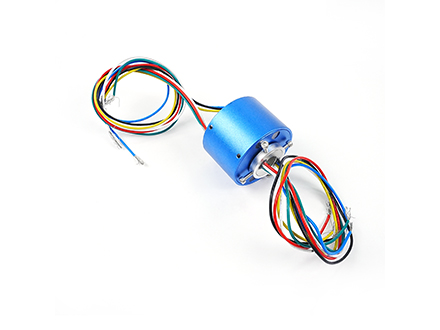
The Problem Behind a Rotating Electrical Connection
Electrical equipment normally relies on wires and cables because they provide a simple and reliable path for current and signals. But cables are not designed to rotate endlessly around a shaft.
Consider a rotating inspection camera. The camera needs electrical power and may also need to send video or control signals back to a stationary control system. If the camera rotates only a few times, a flexible cable may be sufficient. If it rotates continuously in the same direction, however, the cable will eventually wind around the shaft.
This creates several problems:
Cable twisting and mechanical stress
Limited rotation range
Potential cable fatigue
Increased maintenance requirements
Restrictions on continuous rotation
An electrical rotary connector addresses this problem by separating the mechanical rotation from the electrical connection.
So, What Is an Electrical Slip Ring?
An electrical slip ring is a rotating electrical interface that transfers power or electrical signals between a stationary structure and a rotating structure.
One side of the slip ring rotates with the machine, while the other side remains stationary. Electrical contacts maintain a conductive path between the two sides as the equipment rotates.
In practical terms, a slip ring acts like a bridge between the fixed and moving parts of a machine.
This basic principle allows a rotating assembly to receive electrical power, transmit control signals, or communicate with external equipment without relying on a cable that continuously twists around the rotating shaft.
What Happens Inside a Slip Ring?
The internal structure is easier to understand if you think of the slip ring as two systems working together: a mechanical rotating system and an electrical transmission system.
The rotating part is commonly referred to as the rotor. It is connected to the rotating equipment and turns together with it. The stationary part is the stator, which remains fixed to the machine structure.
Inside the assembly are conductive paths and electrical contacts. As the rotor turns, the contacts remain electrically connected to their corresponding conductive paths.
The exact contact technology can vary. Different designs may use different combinations of conductive rings, brushes, contacts, insulation materials, and mechanical support structures depending on the required current, signal type, speed, and service life.
This is why two products that both look like a slip ring connector can have very different internal designs and performance characteristics.
It Is Not Just About Transmitting Electricity
When people hear the term slip ring, they often think only about electrical power. In reality, a modern slip ring can perform several transmission tasks depending on its design.
Power Transmission
The most straightforward application is transferring electrical power from a stationary source to a rotating component.
This can be useful when motors, lighting systems, rotating platforms, or other electrical devices are mounted on the rotating side of a machine.
Signal Transmission
Many machines also need to exchange low-level electrical signals during rotation. Sensors, encoders, switches, and control systems may all require a continuous connection.
For these applications, contact stability and electrical noise characteristics can be just as important as current capacity.
Data Communication
Some specialized rotary electrical connectors are designed to transmit digital communication signals or other high-frequency signals. Depending on the application, this can include interfaces used for Ethernet, USB, video, or other communication systems.
However, high-speed signal transmission places additional requirements on the slip ring design. A power-oriented slip ring should not automatically be assumed to be suitable for high-speed data.
Why Different Machines Need Different Slip Rings
There is no single slip ring design that works equally well for every rotating machine.
A small camera platform may need a compact unit with a few circuits. A large industrial machine may require high-current transmission through a larger central shaft. A robotic joint may prioritize compact dimensions and low rotational resistance, while a wind turbine may require a completely different mechanical and environmental design.
The requirements can change significantly depending on:
Number of electrical circuits
Current and voltage
Rotational speed
Continuous or intermittent rotation
Power or signal transmission
Available installation space
Environmental conditions
Required operating life
This application-driven approach is one of the most important things to understand when selecting an electrical slip ring.
Common Slip Ring Designs and When They Make Sense
Different mechanical structures are available because rotating equipment itself can have very different layouts.
Capsule Slip Rings
Capsule designs are compact and are often used where installation space is limited. They can be suitable for cameras, sensors, small automation equipment, and other relatively compact rotating devices.
Through-Bore Slip Rings
A through-bore slip ring has a central opening through which a shaft or other mechanical component can pass. This makes it particularly useful when the slip ring needs to be installed around an existing rotating shaft.
Pancake Slip Rings
Pancake designs use a relatively flat structure. They can be considered when axial installation space is restricted but sufficient radial space is available.
Custom Slip Rings
Some machines do not fit standard dimensions or electrical configurations. In these cases, a Custom Slip Ring may be developed around the equipment's specific mechanical and electrical requirements.
Where Can You Find Electrical Slip Rings?
Once you know what problem a slip ring solves, its applications become much easier to recognize.
Robotic Systems
Robots often have joints or platforms that rotate while carrying electrical devices. A slip ring can help prevent cables from becoming tangled or repeatedly twisted inside rotating mechanisms.
Surveillance Cameras
Pan-and-tilt camera systems may need continuous rotation while maintaining power and signal connections. A suitable slip ring can provide the electrical path without limiting the camera's rotation.
Wind Turbines
Wind turbines contain rotating assemblies that may require electrical and signal transmission. The electrical interface needs to withstand the mechanical and environmental conditions associated with the equipment.
Industrial Automation
Rotary tables, indexing systems, packaging machinery, inspection equipment, and automated production systems can use slip rings when electrical connections need to cross a rotating interface.
Medical Imaging Equipment
Some medical imaging systems use rotating components that require electrical power and signal transmission. In these applications, reliability and controlled electrical performance are particularly important.
Radar and Rotating Monitoring Systems
Radar antennas and other rotating monitoring equipment need to maintain communication and power connections while moving continuously. Slip ring assemblies can provide the required rotating electrical interface.
How Do You Know What Slip Ring You Need?
Instead of starting with a product catalog, it is often easier to start with the machine itself.
Ask a few basic questions:
How many circuits are required?
Count the separate power, signal, and communication channels that need to pass through the rotating interface. This gives you a starting point for determining the required circuit configuration.
How much current is required?
Power circuits may require considerably more current than signal circuits. The current requirement should be considered for each circuit rather than looking only at the total number of channels.
How fast will the equipment rotate?
Rotational speed can influence contact wear, heat generation, electrical stability, and expected service life. A slip ring designed for slow intermittent movement may not be appropriate for high-speed continuous rotation.
Does the machine have a central shaft?
If a shaft or cable needs to pass through the center, a through-bore configuration may be more practical. If installation space is limited, a compact capsule or flat design may make more sense.
Is the machine exposed to a harsh environment?
Temperature, humidity, dust, vibration, and other environmental conditions can affect the appropriate slip ring construction. Industrial applications should therefore be evaluated according to the actual working environment.
Electrical Slip Ring Selection: Specifications That Matter
Once the application is understood, technical specifications become much easier to compare.
| Specification | Why It Matters |
|---|---|
| Circuit Quantity | Determines how many independent power or signal channels can be transmitted. |
| Current Rating | Shows whether the slip ring can handle the electrical load required by the rotating equipment. |
| Voltage Rating | Helps ensure the connector is suitable for the operating voltage. |
| Rotational Speed | Affects mechanical wear and electrical performance during operation. |
| Outer Diameter | Must fit the available mechanical installation space. |
| Bore Size | Important when the slip ring needs to be installed around a shaft or allow components to pass through. |
| Signal Type | Determines whether a standard power slip ring or specialized signal transmission design is appropriate. |
| Service Life | Helps determine whether the product can meet the expected operating cycles of the machine. |
What Makes a Good Electrical Slip Ring?
A good slip ring is not simply one with a high current rating or a long service-life number. Its quality comes from how well the entire assembly matches the machine.
Stable electrical contact, appropriate contact materials, mechanical precision, effective insulation, suitable bearings, thermal management, and reliable housing construction can all contribute to dependable performance.
For applications involving sensitive signals, low electrical noise and stable transmission may be more important than maximum power capacity. For heavy industrial equipment, mechanical strength and current-handling capability may take priority.
In other words, slip ring performance is application-specific.
Frequently Asked Questions
Can an electrical slip ring rotate continuously?
Yes. Many electrical slip rings are designed specifically for continuous rotation. The appropriate rotational speed and expected service life depend on the particular design and operating conditions.
Can a slip ring transmit power and signals at the same time?
Yes. A slip ring can be designed with separate circuits for power, control signals, sensors, and other electrical connections. The exact configuration depends on the application.
Does a slip ring replace a cable?
It does not replace cables throughout the machine. Instead, it replaces the cable connection across a rotating interface where continuous twisting would otherwise become a problem.
What is a through-bore slip ring used for?
A through-bore slip ring is useful when a rotating shaft or other component needs to pass through the center of the slip ring. It is commonly considered for machinery with a central rotating structure.
How long does an electrical slip ring last?
Service life varies significantly depending on the contact technology, rotational speed, electrical load, environment, and operating conditions. The manufacturer's rated life should be evaluated against the actual application.
Can slip rings transmit Ethernet or other data?
Some specialized slip rings can transmit high-speed digital signals, including certain communication interfaces. However, high-speed data transmission requires a design specifically suited to the signal characteristics and bandwidth requirements.
Final Thoughts
The easiest way to understand an electrical slip ring is to think about the problem it solves: a machine needs to rotate, but its electrical connection cannot rotate indefinitely with an ordinary cable.
By maintaining an electrical path between stationary and rotating components, a slip ring allows equipment to move freely while continuing to receive power and exchange electrical signals or data.
From robotics and surveillance systems to industrial automation, wind turbines, medical equipment, and rotating machinery, the applications are broad. The right design, however, depends on the machine's actual requirements.
Before selecting a slip ring, consider the circuit count, current, voltage, rotational speed, signal type, dimensions, installation method, environment, and expected service life. For OEM and custom equipment, discussing these requirements with an experienced slip ring manufacturer can also help ensure that the final design fits both the electrical and mechanical sides of the application.