Information
Focus on RHD Precision Industry - Get to know the new information of the industry quickly!


Focus on RHD Precision Industry - Get to know the new information of the industry quickly!
2026-07-30 11:13:09
As industrial automation and intelligent machinery continue to evolve, equipment increasingly requires reliable power and signal transmission between stationary and rotating parts. In many applications, continuous rotation is essential, but traditional wiring can twist, wear out, or even break over time. An Electrical Swivel Joint solves this challenge by enabling uninterrupted electrical connections while allowing components to rotate freely.
From wind turbines and robotics to packaging equipment and medical imaging systems, Electrical Swivel Joints play a vital role in ensuring stable operation, reducing maintenance, and improving system reliability. This article explains what an Electrical Swivel Joint is, how it works, its main features, key applications, and important factors to consider when selecting one for your project.
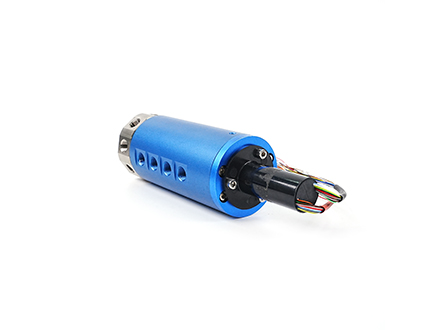
An electrical swivel joint is a rotary electrical connection device designed to transmit power, control signals, or data between stationary and rotating components without interrupting electrical continuity. As one part of the joint rotates, the other remains stationary, allowing equipment to operate continuously without cable twisting or tangling.
Electrical swivel joints are commonly used in systems that require 360-degree continuous rotation or repetitive rotational movement. Depending on the application, they can transmit:
Electrical power
Analog signals
Digital signals
Ethernet communication
USB signals
CAN bus communication
Sensor feedback signals
In many industrial applications, the electrical swivel joint is also referred to as a rotary electrical connector or is integrated into a Slip Ring assembly, depending on the design and transmission requirements.
The operating principle of an electrical swivel joint is based on maintaining continuous electrical contact while allowing unrestricted mechanical rotation.
Inside the unit, conductive rings are mounted on the rotating shaft, while stationary brushes maintain contact with these rings. As the shaft rotates, the brushes slide smoothly along the ring surfaces, ensuring that electrical current or signals continue to flow without interruption.
The basic working process includes:
Power or signals enter the stationary side.
Conductive brushes transfer electricity to the rotating rings.
The rotating assembly continues spinning while maintaining stable electrical contact.
Power and signals exit through the rotating side to connected equipment.
Modern electrical swivel joints are designed to minimize electrical noise, reduce contact resistance, and provide reliable transmission even during continuous high-speed rotation.
Although designs vary by manufacturer, most electrical swivel joints include several essential components.
Conductive rings provide continuous electrical pathways between stationary and rotating sections.
High-quality conductive materials help reduce resistance and improve transmission stability.
Brushes maintain electrical contact with the rotating rings.
Premium brush materials reduce friction, minimize wear, and extend operating life.
Precision bearings support smooth mechanical rotation while reducing vibration and mechanical stress.
High-quality bearings also improve rotational accuracy and equipment reliability.
The housing protects internal components from dust, moisture, vibration, and mechanical damage.
Depending on the application, housings may be manufactured from aluminum alloy, stainless steel, or engineering plastics.
Many industrial electrical swivel joints include sealing structures to prevent contaminants from entering the unit.
This improves performance in harsh environments such as offshore equipment, mining machinery, and outdoor automation systems.
Modern electrical swivel joints offer numerous advantages for rotating equipment.
The biggest advantage is uninterrupted rotation without cable twisting, allowing equipment to operate continuously.
High-quality contact technology ensures stable transmission of electrical power and communication signals with minimal interference.
Many electrical swivel joints are designed to fit into equipment with limited installation space while maintaining high performance.
Advanced materials and precision manufacturing provide long operating life with minimal maintenance.
Because cable twisting is eliminated, electrical swivel joints reduce wear on wiring systems and lower maintenance costs.
Different applications require different swivel joint configurations.
Designed primarily for transmitting electrical power and basic control signals.
Typical applications include:
Industrial machinery
Packaging equipment
Conveyor systems
Optimized for low-noise signal transmission.
Suitable for:
Encoder systems
Sensors
Communication equipment
Automation control systems
Combines electrical transmission with other functions such as pneumatic or hydraulic rotary connections.
These are commonly used in advanced manufacturing equipment and robotic systems.
Designed for applications involving continuous high-speed rotation while maintaining transmission stability.
Electrical swivel joints are widely used across many industries because they enable reliable rotary transmission.
Automation systems often include rotating equipment that requires continuous electrical connections.
Typical applications include:
Packaging machines
Assembly lines
Rotary indexing tables
Automated production equipment
Wind turbines require continuous electrical transmission between rotating blades and stationary control systems.
Electrical swivel joints help transfer:
Power
Sensor signals
Control data
while allowing uninterrupted blade rotation.
Industrial robots frequently perform rotating movements while transmitting electrical signals to motors, sensors, and control units.
Electrical swivel joints improve:
Motion flexibility
Position accuracy
Equipment reliability
Medical imaging systems such as CT scanners use rotating components that require stable electrical transmission.
Electrical swivel joints help ensure accurate signal transfer during continuous operation.
Marine cranes, offshore platforms, and shipboard machinery operate in demanding environments.
Sealed electrical swivel joints provide reliable performance despite exposure to moisture, salt spray, and vibration.
Pan-tilt camera systems rotate continuously to monitor large areas.
Electrical swivel joints allow cameras to rotate freely while transmitting power, video, and control signals.
Many people use these terms interchangeably, but there are subtle differences.
| Feature | Electrical Swivel Joint | Slip Ring |
|---|---|---|
| Primary Function | Electrical transmission during rotation | Rotary electrical transmission device |
| Rotation | Continuous or repetitive | Continuous 360° |
| Signal Transmission | Yes | Yes |
| Power Transmission | Yes | Yes |
| Common Applications | Industrial automation, robotics, surveillance | Wind turbines, packaging, robotics, medical systems |
In many industries, an electrical swivel joint is essentially a type of slip ring, although the exact terminology may vary depending on the manufacturer and application.
Selecting the correct electrical swivel joint depends on several factors.
Determine how many power and signal channels are required.
Ensure the joint can safely handle the required electrical load.
Different products support different operating speeds.
High-speed applications require specialized designs.
Consider:
Temperature
Dust
Moisture
Corrosion
Vibration
For harsh environments, sealed and corrosion-resistant models are recommended.
Choose a compact design if installation space is limited.
Many applications require customized solutions, including:
Circuit configuration
Connector types
Mounting methods
Housing materials
Working with an experienced electrical swivel joint manufacturer allows customers to obtain products tailored to their equipment.
A reliable manufacturer provides more than standard products.
Professional suppliers can offer:
OEM and ODM services
Customized designs
Technical support
Strict quality control
Reliability testing
Fast production capability
Choosing an experienced electrical swivel joint supplier helps improve equipment reliability while reducing development time and maintenance costs.
An electrical swivel joint transmits electrical power and signals between stationary and rotating parts while allowing continuous rotation without cable twisting.
They are closely related. In many industrial applications, an electrical swivel joint is considered a type of slip ring designed for rotary electrical transmission, although terminology may differ among manufacturers.
Electrical swivel joints are widely used in industrial automation, robotics, wind energy, medical equipment, marine systems, packaging machinery, and surveillance equipment.
Yes. Depending on the design, they can transmit Ethernet, USB, CAN bus, encoder signals, and other communication protocols in addition to electrical power.
Yes. Many manufacturers provide customized solutions based on circuit count, current capacity, connectors, mounting methods, operating speed, and environmental requirements.
An electrical swivel joint is a key component in modern rotating equipment, providing reliable transmission of power and signals while eliminating cable twisting and reducing maintenance. Whether used in industrial automation, robotics, wind energy, medical imaging, or surveillance systems, these devices improve operational efficiency and long-term reliability.
By understanding how electrical swivel joints work and selecting the right specifications for your application, businesses can enhance equipment performance and reduce downtime. Partnering with an experienced electrical swivel joint manufacturer ensures access to high-quality products, engineering expertise, and customized solutions that meet the demands of today's advanced industrial systems.

Phone: +86 13622631318
Email:info@reehonde.com
Add: Room 301, Building 1, No. 11, Dalingshan Lakeside South 1st Street, Dalingshan Town, Dongguan City, Guangdong Province, China
Copyright © 2026 Dongguan Rui-Hong-De Precision Industry Co., Ltd All rights reserved. Privacy policy | Terms and Conditions


