Information
Focus on RHD Precision Industry - Get to know the new information of the industry quickly!


Focus on RHD Precision Industry - Get to know the new information of the industry quickly!
2026-07-23 16:35:00
Modern medical imaging technology continues to demand faster scanning speeds,higher image resolution,and more reliable data transmission.As CT(Computed Tomography)systems evolve toward multi-slice and high-performance imaging,traditional electrical transmission methods face increasing challenges in handling large amounts of data.This is where fiber optic Slip Rings play an important role.
A fiber optic slip ring for CT imaging systems provides high-speed,stable,and interference-resistant data transmission between the rotating gantry and stationary components.It enables continuous rotation while maintaining accurate image data transfer,making it a critical component in advanced medical imaging equipment.
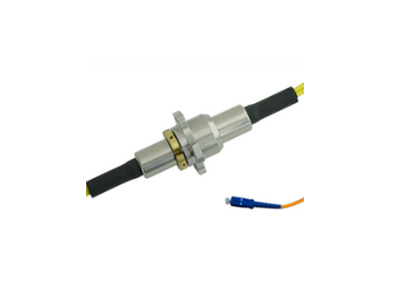
A fiber optic slip ring is a rotary transmission device that uses optical fiber technology to transfer high-bandwidth data between rotating and stationary parts.
Unlike traditional electrical Slip Rings that rely on metal contacts,fiber optic Slip Rings transmit signals through light,offering several advantages:
Higher data transmission capacity
Lower signal loss
Strong electromagnetic interference resistance
Longer service life
Better signal stability
In CT scanners,the slip ring is installed inside the rotating gantry,allowing continuous communication between rotating imaging components and the fixed processing system.
CT scanners generate enormous amounts of image data during each rotation.Modern systems,especially multi-slice CT and high-resolution CT scanners,require faster and more reliable data transmission.
Traditional cable systems cannot support continuous rotation because cables may become twisted or damaged after repeated movement.
A CT scanner slip ring solves this problem by enabling:
360-degree continuous rotation
Real-time data transfer
Stable communication between rotating and stationary systems
Faster image reconstruction
With the integration of fiber optic technology,CT systems can handle increasingly complex imaging requirements.
A fiber optic slip ring mainly consists of:
Rotating optical components
Stationary optical components
Fiber channels
Precision mechanical structure
Optical coupling system
During CT scanning:
The gantry rotates around the patient at high speed.
The X-ray tube and detector collect image information.
Large amounts of digital data are generated.
The fiber optic slip ring transfers the data from the rotating part to the stationary processing unit.
The computer system reconstructs the images for diagnosis.
The optical transmission process avoids direct electrical contact,reducing wear and improving long-term reliability.
One of the biggest advantages of a fiber optic slip ring is its ability to support extremely high data rates.
Advanced CT scanners require rapid transmission of:
Detector signals
Image data
Control information
System monitoring signals
Fiber optic technology provides the bandwidth needed for modern high-resolution imaging.
CT scanners contain powerful electrical systems that can generate electromagnetic noise.
Electrical Slip Rings may experience signal interference in certain environments,while fiber optic transmission is naturally resistant to electromagnetic interference(EMI).
This helps maintain:
Stable signal quality
Accurate image reconstruction
Reliable equipment operation
A major advantage of medical slip rings is enabling uninterrupted gantry rotation.
Fiber optic slip rings allow CT scanners to operate continuously without cable limitations,supporting:
Spiral CT scanning
High-speed imaging
Shorter examination times
Because fiber optic slip rings do not depend on traditional electrical contact points,they experience less mechanical wear.
Benefits include:
Reduced maintenance requirements
Longer operating lifespan
Improved system reliability
This is especially important for medical equipment that operates continuously in hospitals and imaging centers.
| Feature | Fiber Optic Slip Ring | Electrical Slip Ring |
|---|---|---|
| Transmission Method | Optical signal | Electrical contact |
| Data Capacity | Very high | Limited compared with fiber |
| EMI Resistance | Excellent | Moderate |
| Signal Loss | Very low | Higher over distance |
| Maintenance | Low | Requires contact maintenance |
| Application | Advanced CT systems | Power and basic signal transmission |
In many modern CT scanners,manufacturers combine both technologies through hybrid designs.
Fiber optic slip rings are widely used in:
Modern multi-slice CT systems require rapid transmission of large volumes of detector data.
High-speed rotation requires stable communication between rotating and stationary components.
Fiber optic solutions support high-resolution imaging systems where data accuracy is critical.
Research imaging systems often require customized high-performance transmission solutions.
Selecting the right fiber optic slip ring manufacturer is important for medical equipment reliability.
Key factors include:
A professional manufacturer should have experience with:
Optical design
Precision manufacturing
High-speed rotation systems
Medical equipment applications
CT manufacturers may require customized solutions involving:
Fiber channel numbers
Mechanical dimensions
Rotation speed
Data transmission requirements
A reliable supplier should conduct:
Signal stability testing
Rotation endurance testing
Temperature testing
Environmental testing
Medical applications require strict consistency.A professional medical slip ring manufacturer should have complete quality management processes.
As CT technology continues developing,fiber optic slip rings are expected to improve further.
Future trends include:
Increasing CT resolution will require even faster data communication.
Compact slip rings will help manufacturers develop smaller imaging systems.
Advanced materials and manufacturing processes will extend service life.
Future slip rings may include sensors for predictive maintenance and real-time performance monitoring.
Fiber optic slip rings for advanced CT imaging systems provide the high-speed,reliable,and interference-free communication required by modern medical imaging technology.By supporting continuous rotation and large-volume data transmission,they help CT scanners achieve faster scanning speeds,improved image quality,and greater operational reliability.
For CT equipment manufacturers,choosing an experienced fiber optic slip ring manufacturer and developing customized transmission solutions are essential steps toward building next-generation medical imaging systems.
Fiber optic slip rings provide high-speed,stable,and interference-resistant data transmission during continuous gantry rotation.
Fiber optic slip rings transmit data through optical signals,offering higher bandwidth and better EMI resistance,while electrical slip rings transmit power and electrical signals through contacts.
Yes.Manufacturers can customize optical channels,mechanical structures,rotation speeds,and installation dimensions according to CT system requirements.
The lifespan depends on design,operating conditions,and usage frequency.High-quality models are designed for long-term continuous operation.

Phone: +86 13622631318
Email:info@reehonde.com
Add: Room 301, Building 1, No. 11, Dalingshan Lakeside South 1st Street, Dalingshan Town, Dongguan City, Guangdong Province, China
Copyright © 2026 Dongguan Rui-Hong-De Precision Industry Co., Ltd All rights reserved. Privacy policy | Terms and Conditions


