Information
Focus on RHD Precision Industry - Get to know the new information of the industry quickly!


Focus on RHD Precision Industry - Get to know the new information of the industry quickly!
2026-07-30 11:16:31
Modern industrial equipment increasingly relies on continuous rotation while maintaining stable electrical power and signal transmission. From automated production lines and robotics to wind turbines and packaging machinery, rotating systems require reliable electrical connections that can operate without cable twisting or signal interruption. An Electrical Swivel Joint is designed to meet this challenge by enabling continuous transmission between stationary and rotating components.
However, selecting the right Electrical Swivel Joint involves more than simply choosing a standard model. Engineers and procurement professionals must evaluate electrical performance, mechanical design, environmental conditions, and application requirements to ensure long-term reliability. This guide explains the key factors to consider when choosing the right electrical swivel joint for industrial applications.
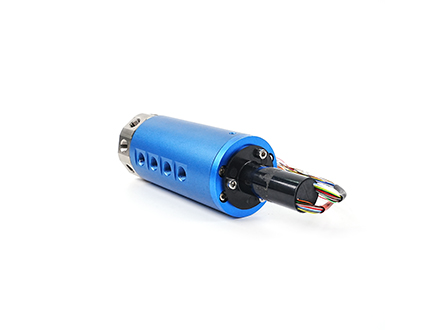
An electrical swivel joint is a rotary electrical transmission device that transfers power, control signals, or data between stationary and rotating parts. It allows continuous 360-degree rotation while maintaining stable electrical connections, preventing cable twisting and reducing equipment wear.
Depending on the application, an electrical swivel joint can transmit:
Electrical power
Control signals
Ethernet communication
Encoder signals
CAN Bus signals
USB communication
Sensor data
Many industrial systems also refer to this type of device as a rotary electrical connector or a specialized Slip Ring, depending on its design and functionality.
A properly selected electrical swivel joint improves equipment performance, extends service life, and minimizes maintenance costs.
Choosing an unsuitable model may lead to:
Signal interference
Power instability
Excessive wear
Frequent maintenance
Equipment downtime
Reduced production efficiency
Careful product selection ensures reliable operation even in demanding industrial environments.
The first step is identifying what the swivel joint needs to transmit.
Typical transmission requirements include:
Electrical power only
Power and control signals
High-speed data communication
Mixed signal transmission
Applications involving Ethernet, USB, or encoder feedback require specialized designs that minimize signal loss and electromagnetic interference.
The number of circuits determines how many independent electrical paths are available.
For example:
Small automation equipment may require only a few circuits.
Complex robotic systems often require multiple power and signal channels.
Selecting the correct circuit configuration helps simplify system integration while reducing unnecessary costs.
Electrical capacity is one of the most important selection criteria.
Before purchasing, confirm:
Rated current
Operating voltage
Peak current requirements
Safety margin
The swivel joint should comfortably handle the maximum electrical load without overheating or excessive contact wear.
Different applications require different operating speeds.
Examples include:
Low-speed rotary tables
Medium-speed packaging machinery
High-speed testing equipment
High-speed applications require precision bearings and optimized internal contact structures to ensure stable electrical transmission.
Installation space often limits component selection.
Consider:
Outside diameter
Length
Shaft diameter
Mounting method
Cable exit direction
Compact designs are ideal for equipment with limited installation space.
Industrial environments can be challenging.
When selecting an electrical swivel joint, evaluate:
High-temperature factories or outdoor equipment may require components designed for extreme operating temperatures.
Manufacturing plants often expose equipment to dust and airborne particles.
A properly sealed housing helps protect internal electrical contacts.
Marine equipment, offshore machinery, and food processing systems may require corrosion-resistant materials and waterproof sealing.
Construction machinery and heavy industrial equipment require swivel joints capable of operating under continuous vibration.
Many automation systems rely on accurate signal transmission.
For encoder feedback, industrial Ethernet, or communication systems, signal integrity is critical.
A high-quality rotary electrical connector minimizes:
Signal loss
Electrical noise
Contact resistance
Communication errors
This is particularly important for precision manufacturing equipment.
The expected operating life should match the equipment's maintenance schedule.
Important indicators include:
Operating cycles
Brush wear resistance
Bearing quality
Contact material
Premium electrical swivel joints are designed for millions of revolutions while maintaining stable electrical performance.
Many industrial projects require customized solutions rather than standard products.
Common customization options include:
Circuit configuration
Current capacity
Connector type
Housing material
Mounting structure
Protection level
Cable length
Working with an experienced electrical swivel joint manufacturer allows businesses to obtain products specifically designed for their equipment.
Electrical swivel joints are widely used across many industries.
Applications include:
Rotary indexing tables
Assembly lines
Packaging equipment
Conveyor systems
They ensure continuous operation while maintaining stable power and signal transmission.
Industrial robots frequently perform rotational movements.
Electrical swivel joints support:
Robot arm rotation
Automated assembly
Motion control
Sensor communication
Reliable transmission improves positioning accuracy and operational efficiency.
Wind turbines require continuous electrical connections between rotating blades and stationary control systems.
Electrical swivel joints transmit:
Power
Sensor signals
Monitoring data
while supporting long-term operation under harsh outdoor conditions.
Medical imaging systems such as CT scanners rely on continuous rotation during operation.
Electrical swivel joints provide stable transmission that supports accurate imaging and reliable equipment performance.
Marine cranes, offshore platforms, and shipboard machinery operate in environments exposed to salt spray, moisture, and vibration.
Corrosion-resistant electrical swivel joints improve reliability and reduce maintenance requirements.
Many engineers use these terms interchangeably, but understanding their relationship helps during product selection.
| Feature | Electrical Swivel Joint | Slip Ring |
|---|---|---|
| Function | Transfers electrical power and signals during rotation | Rotary electrical transmission device |
| Rotation | Continuous or repetitive | Continuous 360° rotation |
| Power Transmission | Yes | Yes |
| Signal Transmission | Yes | Yes |
| Typical Applications | Automation, robotics, packaging | Wind energy, medical equipment, industrial machinery |
In many industrial applications, an electrical swivel joint is a type of slip ring specifically designed for Rotating Electrical Connections.
Product quality depends not only on design but also on manufacturing capability.
A reliable manufacturer should offer:
Comprehensive testing ensures stable electrical performance and consistent product quality.
Professional manufacturers can assist with:
Product selection
Technical consultation
System integration
Customized solutions
Many equipment manufacturers require products designed specifically for their machines.
An experienced electrical swivel joint supplier can provide:
Customized engineering
Flexible production
Prototype development
Mass manufacturing support
Before placing an order, prepare the following information:
Required number of circuits
Current and voltage ratings
Signal types
Rotation speed
Installation dimensions
Environmental conditions
Expected service life
Customization requirements
Providing complete technical information allows suppliers to recommend the most suitable solution and helps avoid costly redesigns.
An electrical swivel joint transmits power and electrical signals between stationary and rotating components while allowing continuous rotation without cable twisting.
Consider factors such as transmission type, number of circuits, current rating, operating speed, installation space, environmental conditions, and customization requirements.
They are widely used in industrial automation, robotics, wind energy, medical imaging, packaging machinery, marine equipment, and surveillance systems.
Yes. Many models support Ethernet, CAN Bus, USB, encoder signals, and other industrial communication protocols.
Yes. Professional manufacturers offer customized solutions based on circuit configuration, current capacity, mounting methods, protection level, and connector requirements.
Selecting the right electrical swivel joint is essential for ensuring reliable power and signal transmission in rotating industrial equipment. By carefully evaluating transmission requirements, electrical specifications, mechanical design, environmental conditions, and customization options, engineers can improve system performance while reducing maintenance and downtime.
Whether used in automation systems, robotics, wind energy, medical devices, or heavy industrial machinery, partnering with an experienced electrical swivel joint manufacturer ensures access to high-quality products, expert technical support, and tailored solutions that meet the demands of modern industrial applications.

Phone: +86 13622631318
Email:info@reehonde.com
Add: Room 301, Building 1, No. 11, Dalingshan Lakeside South 1st Street, Dalingshan Town, Dongguan City, Guangdong Province, China
Copyright © 2026 Dongguan Rui-Hong-De Precision Industry Co., Ltd All rights reserved. Privacy policy | Terms and Conditions


