Information
Focus on RHD Precision Industry - Get to know the new information of the industry quickly!


Focus on RHD Precision Industry - Get to know the new information of the industry quickly!
2026-07-23 16:11:46
Computed Tomography(CT)scanners are among the most advanced medical imaging systems,providing fast and detailed cross-sectional images that help physicians diagnose a wide range of conditions.One of the key innovations that made modern CT scanners faster and more efficient is Slip Ring technology.Without it,today's continuous high-speed CT scanning would not be possible.
This article explains what slip ring technology in CT scan systems is,how it works,its advantages,and why it is essential for modern medical imaging equipment.
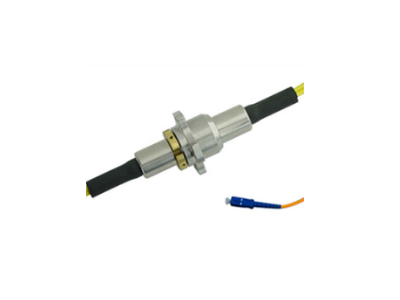
A slip ring is an electromechanical device that enables the continuous transmission of electrical power,control signals,and data between stationary and rotating parts of a machine.In a CT scanner,the rotating gantry contains components such as the X-ray tube and detectors,while the stationary frame houses the power supply and processing systems.
Traditional cable connections would twist and eventually fail if the gantry rotated continuously.Slip ring technology eliminates this limitation by allowing uninterrupted electrical and data transfer during continuous rotation.
As a result,CT scanner Slip Rings enable modern scanners to rotate smoothly without stopping to unwind cables,significantly improving scanning speed and image quality.
Inside a CT scanner,the gantry rotates rapidly around the patient while collecting imaging data from multiple angles.
A medical slip ring consists of several key components:
Conductive rings mounted on the rotating assembly
Stationary brushes or contact elements
Insulating materials
Signal and power transmission channels
During operation:
Electrical power is transferred from the stationary system to the rotating X-ray tube.
Control signals are continuously exchanged between rotating and stationary components.
Image data collected by detectors is transmitted to the processing system in real time.
Continuous rotation allows uninterrupted image acquisition.
Some advanced CT systems also integrate fiber optic Slip Rings,enabling high-speed optical data transmission while minimizing electromagnetic interference.
Modern CT imaging demands rapid scanning,high image resolution,and reliable performance.Slip ring technology makes these requirements achievable by supporting continuous gantry rotation.
Key benefits include:
Unlike early CT scanners that had to stop and reverse direction after each rotation,slip ring technology allows unlimited 360-degree continuous rotation.
This dramatically improves scanning efficiency and patient throughput.
Continuous rotation enables spiral(helical)CT scanning,reducing examination time and allowing physicians to capture images much more quickly.
Shorter scan times are especially valuable for emergency patients and children who may have difficulty remaining still.
Continuous data acquisition minimizes motion artifacts and provides smoother image reconstruction.
This results in clearer diagnostic images and greater accuracy.
Replacing continuously twisting cables with a durable Electrical Slip Ring reduces mechanical stress and extends the operational life of the CT scanner.
Different CT scanners may use various slip ring designs depending on their performance requirements.
These are the most common and are used to transmit electrical power and control signals.
Applications include:
X-ray tube power supply
Motor control
Sensor communication
High-end CT scanners often require extremely fast data transmission.
A fiber optic slip ring offers:
High bandwidth
Low signal loss
Excellent EMI resistance
High-speed digital communication
These features are ideal for modern multi-slice CT imaging systems.
Hybrid designs combine electrical and optical transmission within a single assembly.
This solution supports both power delivery and high-speed data communication while reducing system complexity.
Slip ring technology offers several important advantages for medical equipment manufacturers and healthcare providers.
Continuous rotation enables rapid image acquisition,making modern CT scanners faster and more efficient.
Shorter scanning times improve patient comfort and reduce the need for repeated examinations.
Stable signal transmission contributes to high-quality images with fewer artifacts.
High-quality CT scanner slip rings are designed for long operating lifespans,reducing maintenance costs and minimizing equipment downtime.
Modern medical slip ring manufacturers develop compact slip ring assemblies that help reduce the overall size and weight of CT scanner gantries.
Although slip ring technology has advanced significantly,manufacturers still face several engineering challenges.
These include:
High-speed rotation stability
Heat dissipation
Signal integrity
Electrical noise reduction
Wear resistance
Long service life
To overcome these challenges,many slip ring manufacturers use precision machining,advanced conductive materials,gold alloy contacts,and high-performance insulation technologies.
When selecting a slip ring for medical imaging equipment,engineers should consider several factors:
Number of power and signal circuits
Current and voltage ratings
Rotational speed
Data transmission requirements
Fiber optic integration
Mechanical dimensions
Operating temperature
Expected service life
Working with an experienced medical slip ring manufacturer ensures the slip ring meets the stringent performance and reliability requirements of CT scanner systems.
As medical imaging continues to evolve,slip ring technology is also advancing.
Emerging trends include:
Higher data transmission speeds
Improved fiber optic integration
Smaller and lighter designs
Increased rotational speeds
AI-assisted equipment monitoring
Longer maintenance intervals
Enhanced electromagnetic compatibility
These innovations will support next-generation CT scanners capable of delivering even faster scans and more precise diagnostic images.
Slip ring technology enables continuous transmission of electrical power,signals,and data between the stationary and rotating parts of a CT scanner,allowing uninterrupted gantry rotation.
They eliminate cable twisting,enable continuous scanning,improve image quality,reduce scan time,and increase equipment reliability.
The most common types include electrical slip rings,fiber optic slip rings,and hybrid slip rings that combine power and optical data transmission.
Yes.Professional slip ring manufacturers provide custom solutions based on electrical requirements,rotational speed,dimensions,circuit count,and data transmission needs.
Slip ring technology in CT scan systems is a cornerstone of modern medical imaging.By enabling continuous power and data transmission during high-speed gantry rotation,it allows CT scanners to perform faster examinations,produce higher-quality images,and operate with greater reliability.As imaging technology advances,innovations such as fiber optic slip rings and hybrid designs will continue to enhance the performance of next-generation CT systems,making the selection of an experienced medical slip ring manufacturer increasingly important for equipment developers.

Phone: +86 13622631318
Email:info@reehonde.com
Add: Room 301, Building 1, No. 11, Dalingshan Lakeside South 1st Street, Dalingshan Town, Dongguan City, Guangdong Province, China
Copyright © 2026 Dongguan Rui-Hong-De Precision Industry Co., Ltd All rights reserved. Privacy policy | Terms and Conditions


