
Slip rings play an important role in industrial equipment that requires continuous rotation and electrical transmission between stationary and rotating components. From automated production lines to packaging machinery and robotics, selecting the right industrial slip ring is essential for maintaining stable electrical connections and reliable equipment operation.
However, slip rings are available in different structures, sizes, circuit configurations, and transmission capabilities. Choosing a suitable product requires more than matching the outer dimensions. Equipment manufacturers and procurement teams need to consider electrical specifications, rotational speed, installation space, operating environment, and long-term maintenance requirements.
This guide explains the key factors to consider when selecting a slip ring for industrial applications.
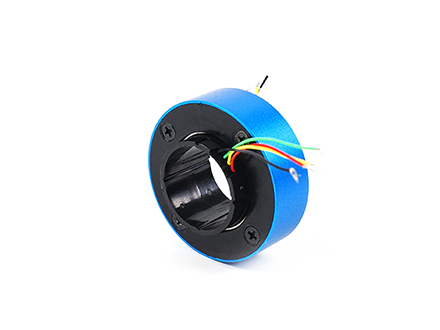
1. Understand Your Application Requirements
Before comparing different slip ring models, identify how the component will be used in your equipment. The application determines the required mechanical structure, electrical configuration, and operating performance.
Start by answering the following questions:
Which part of the equipment needs to rotate?
What electrical power or signals need to pass through the rotating connection?
How many circuits are required?
What is the normal operating speed?
How much installation space is available?
Will the equipment operate in a dusty, humid, or high-temperature environment?
Having a clear understanding of these requirements helps narrow down suitable slip ring types and reduces the risk of selecting an unsuitable model.
2. Select the Right Slip Ring Structure
Different slip ring structures are designed for different mechanical layouts and installation conditions. The following types are commonly considered in industrial equipment.
Capsule Slip Rings
Capsule slip rings feature a compact enclosed structure and are suitable for equipment with limited installation space. They are commonly used in small rotary devices, instruments, and compact automation systems.
Through Bore Slip Rings
Through Bore Slip Rings feature a hollow central opening that allows a shaft, cable, or other mechanical component to pass through the center. They are often used in rotary tables, industrial automation equipment, and machinery with a central shaft arrangement.
Pancake Slip Rings
Pancake slip rings have a flat, disc-shaped structure. They can be considered when axial installation space is limited, although their radial dimensions and other design requirements need to be evaluated carefully.
Fiber Optic Rotary Joints
Fiber optic rotary joints are designed to transmit optical signals between stationary and rotating components. They are used in systems that require high-bandwidth optical communication during rotation.
Hybrid Slip Rings
Hybrid slip rings combine different transmission technologies in one assembly. Depending on the design, they may support electrical power, electrical signals, and optical or other transmission channels within the same rotating system.
The best structure depends on the equipment layout, available space, transmission requirements, and mechanical design. Buyers should discuss the application with the manufacturer if a standard structure does not fully match their requirements.
3. Check Voltage, Current, and Circuit Requirements
Electrical specifications are among the most important factors in slip ring selection. An unsuitable electrical configuration may lead to unstable transmission, excessive heating, or premature component wear.
Operating Voltage
Confirm the rated operating voltage required by the equipment. The slip ring should be designed with appropriate insulation and electrical clearance for the intended application.
Current Rating
Determine the current required for each circuit. Power transmission circuits may require different contact structures and conductive materials from low-current signal circuits.
Number of Circuits
Calculate the total number of circuits needed for motors, sensors, control systems, and other electrical components. It is also useful to consider whether additional circuits may be required in future equipment upgrades.
Power and Signal Transmission
Some industrial systems require power and control signals to be transmitted simultaneously. In these cases, the slip ring design should consider circuit separation, electrical interference, and the characteristics of each signal type.
4. Consider Rotational Speed and Operating Conditions
Rotational speed affects the mechanical and electrical performance of a slip ring. A product designed for low-speed applications may not be suitable for machinery operating at higher speeds.
When selecting an industrial slip ring, confirm the normal operating speed, maximum speed, rotation direction, and duty cycle. Continuous operation and frequent start-stop cycles may also influence product selection.
Environmental conditions should be considered at the same time. Dust, moisture, vibration, temperature changes, and corrosive substances can affect the performance and service life of internal components.
For demanding applications, discuss the required protection level, housing material, sealing structure, and maintenance conditions with the slip ring manufacturer.
5. Confirm Installation Dimensions and Mounting Requirements
Even when the electrical specifications are correct, a slip ring may not fit the equipment if its dimensions and mounting configuration are unsuitable.
Important mechanical parameters include:
Inner diameter or bore diameter
Outer diameter
Overall length or height
Mounting flange dimensions
Shaft connection and fixing method
Cable outlet direction and cable length
Available installation clearance
For equipment with a central shaft, a Through Bore Slip Ring may be appropriate. For compact devices with limited space, a capsule slip ring may be easier to integrate. Providing mechanical drawings or installation photos can help the manufacturer confirm compatibility.
6. Evaluate Signal Transmission Requirements
Modern industrial equipment often relies on sensors, control systems, communication modules, and data acquisition devices. In addition to power transmission, the slip ring may need to support stable signal transmission.
Different signals have different transmission requirements. Low-level analog signals, digital signals, encoder signals, and high-frequency signals may require different design considerations.
When discussing signal transmission with a supplier, provide the signal type, frequency range, communication protocol, and any requirements for electrical noise control. For sensitive applications, ask about relevant testing and performance data rather than assuming all slip rings support every signal type.
7. Standard Slip Ring vs. Custom Slip Ring
Standard slip rings are suitable for applications that match existing product specifications. They can simplify product selection and may reduce development time. However, equipment with special dimensions, circuit combinations, or environmental requirements may need a custom slip ring.
| Factor | Standard Slip Ring | Custom Slip Ring |
|---|---|---|
| Dimensions | Available standard sizes | Can be designed around equipment dimensions |
| Circuit Configuration | Fixed or limited options | Can be configured according to requirements |
| Installation | Suitable for compatible layouts | Can accommodate special mounting needs |
| Development | Usually less design work | May require engineering evaluation and samples |
For OEM equipment manufacturers, custom slip ring design can help integrate the rotary electrical connection into the overall machine structure. The final choice should balance technical requirements, development time, and total project cost.
8. What to Check When Choosing a Slip Ring Manufacturer
Finding a reliable slip ring manufacturer is an important part of the procurement process. Beyond product specifications, buyers should evaluate the supplier's engineering experience, manufacturing processes, quality control, and communication capabilities.
Engineering and Customization Capability
Check whether the manufacturer can evaluate application drawings, recommend suitable structures, and customize dimensions or electrical configurations when required.
Quality Inspection and Testing
Ask about the manufacturer's inspection procedures. Depending on the product design, relevant checks may include electrical continuity, contact resistance, insulation resistance, dielectric strength, and rotational performance.
Production and Supply Capacity
For wholesale orders and long-term OEM projects, confirm whether the supplier can support the required order volume, production schedule, and repeat-order consistency.
Technical Communication
A capable supplier should be able to understand your equipment requirements and provide clear feedback on product selection, design feasibility, and technical specifications.
9. Information to Prepare Before Requesting a Slip Ring Quotation
Providing complete technical information helps manufacturers evaluate your project more efficiently and prepare a more accurate quotation.
| Required Information | Details to Provide |
|---|---|
| Application | Equipment type and operating purpose |
| Structure | Capsule, through bore, pancake, or other design |
| Dimensions | Inner diameter, outer diameter, length, and mounting details |
| Electrical Requirements | Voltage, current, and number of circuits |
| Transmission | Power, analog signals, digital signals, or data |
| Operating Conditions | Speed, temperature, humidity, dust, and duty cycle |
| Order Information | Sample quantity, estimated bulk order, and delivery expectations |
If available, include technical drawings, wiring diagrams, product photos, or an existing slip ring sample. These materials can help the engineering team understand your requirements and reduce unnecessary communication during the selection process.
Frequently Asked Questions
Q1: What is the most important factor when choosing an industrial slip ring?
There is no single factor that applies to every application. Electrical specifications, mechanical dimensions, rotational speed, signal requirements, and working conditions should be evaluated together.
Q2: How do I know whether I need a through bore slip ring or a capsule slip ring?
A through bore slip ring is suitable when a shaft or other component needs to pass through the center. A capsule slip ring is often considered for compact equipment without a requirement for a large central opening.
Q3: Can one slip ring transmit power and data at the same time?
Yes, some slip ring designs can transmit power and electrical signals simultaneously. The specific signal types, circuit configuration, and electrical interference requirements should be confirmed during product selection.
Q4: When should I choose a custom slip ring?
Consider a custom slip ring when standard products cannot meet your required dimensions, circuit count, current rating, rotational speed, mounting structure, or environmental conditions.
Q5: What affects the service life of an industrial slip ring?
Service life can be influenced by contact materials, mechanical structure, rotational speed, electrical load, operating environment, installation quality, and maintenance practices.
Conclusion
Choosing the right industrial slip ring requires a complete understanding of both electrical and mechanical requirements. By evaluating the slip ring structure, voltage, current, circuit count, rotational speed, signal transmission, installation dimensions, and working environment, equipment manufacturers can identify a solution that fits their application.
For OEM projects and bulk purchasing, working with an experienced slip ring manufacturer also helps ensure suitable customization, consistent production, and technical support throughout the procurement process.
If you are sourcing industrial slip rings or need a customized rotary electrical connector, contact our team to discuss your technical requirements.