
Slip Rings are electromechanical devices used to transfer electrical power and signals between a stationary structure and a rotating component. They allow equipment to maintain continuous electrical connections while rotating, eliminating the need for cables to twist or become tangled.
Because of this function, Slip Rings are widely used in industrial machinery, automation equipment, robotics, wind turbines, medical equipment, and other rotating systems.
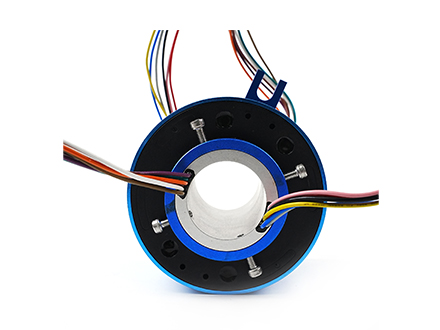
How Does a Slip Ring Work?
A typical slip ring consists of rotating conductive rings and stationary brushes or contacts. The slip ring rotates together with the equipment shaft, while the stationary contacts maintain electrical contact with the rotating rings.
This structure allows power, electrical signals, or data to pass between stationary and rotating components while the equipment continues to rotate.
What Are Slip Rings Used For?
Slip Rings are mainly used in applications where electrical power or signals need to be transferred to or from a continuously rotating component.
1. Industrial Automation
Slip rings can be integrated into automated machinery that requires continuous rotation. They help transmit power and control signals without restricting the movement of the rotating mechanism.
They can be used in rotary indexing equipment, automated production systems, rotating platforms, and other industrial machinery.
2. Robotics
Robotic systems often require multiple joints to rotate while maintaining electrical connections. Slip rings can transmit power, control signals, and other electrical signals through rotating joints.
Depending on the robot design, a customized slip ring can combine multiple circuits in a compact assembly.
3. Wind Turbines
Wind turbines contain rotating components that require electrical connections between the rotating and stationary sections. Slip rings can be used to transfer power and signals while the turbine components rotate.
The specific slip ring design depends on the turbine structure, electrical requirements, environmental conditions, and rotational speed.
4. Rotary Equipment
Many types of rotary equipment need electrical connections while rotating continuously. Slip rings provide a practical way to maintain these connections without using cables that could become twisted during operation.
Applications can include rotating tables, cable reels, inspection systems, packaging machinery, and other industrial rotary mechanisms.
5. Medical Equipment
Some medical imaging and diagnostic equipment contains rotating assemblies that require continuous transmission of electrical power and signals. Slip rings can help maintain these connections during rotation.
For medical applications, factors such as electrical performance, compact design, reliability, and application-specific requirements need to be considered carefully.
6. Surveillance and Camera Systems
Pan-tilt camera systems and other rotating monitoring equipment may require power and signal transmission while the camera continuously rotates.
A suitable slip ring can help provide continuous electrical connectivity while allowing the camera assembly to rotate without cable limitations.
What Can a Slip Ring Transmit?
Depending on its design, a slip ring can transmit different types of electrical connections, including:
Electrical power
Control signals
Analog signals
Digital signals
Communication signals
Data signals
Some customized slip ring assemblies can combine power circuits and signal circuits within the same unit. The required circuit configuration depends on the application and system design.
Why Use a Slip Ring Instead of a Cable?
When a machine rotates continuously, a conventional cable can twist, wind, or experience mechanical stress. This can limit the rotation range or eventually affect cable performance.
A slip ring allows electrical connections to remain continuous while the rotating component moves. This can simplify the design of rotating equipment and provide greater freedom for continuous rotation.
How to Choose a Slip Ring for an Application?
The right slip ring should be selected according to the electrical, mechanical, and environmental requirements of the equipment.
Number of circuits: Determine how many independent power or signal circuits are required.
Current and voltage: Select ratings that meet the electrical requirements of the system.
Rotational speed: Check the required operating speed of the rotating equipment.
Installation method: Consider whether a capsule, through-bore, flange-mounted, or other configuration is suitable.
Signal requirements: For signal or data transmission, electrical characteristics should match the application.
Environmental conditions: Consider dust, moisture, temperature, and other operating conditions.
Space limitations: The slip ring dimensions should be compatible with the available installation space.
Conclusion
Slip rings are used wherever electrical power or signals need to pass between stationary and rotating components. They are found in industrial automation, robotics, wind turbines, medical equipment, surveillance systems, and many other rotary applications.
Choosing the right slip ring requires consideration of current, voltage, circuit number, rotational speed, signal type, installation method, and operating environment. For specialized equipment, a customized slip ring can be designed around the specific requirements of the rotating system.
FAQ
What is the main purpose of a slip ring?
The main purpose of a slip ring is to transfer electrical power or signals between stationary and rotating components while maintaining continuous electrical connections.
Can a slip ring transmit data?
Yes. Depending on its design, a slip ring can be configured for power, control signals, communication signals, or data transmission.
Where are slip rings commonly used?
Common applications include industrial automation, robotics, wind turbines, rotating machinery, medical equipment, camera systems, and other equipment requiring continuous rotation.
Can a slip ring be customized?
Yes. Slip rings can be customized according to circuit number, current, voltage, rotational speed, dimensions, signal requirements, mounting method, and environmental conditions.
Looking for a Slip Ring for Your Application?
If your equipment requires continuous power or signal transmission during rotation, contact us to discuss slip ring specifications and customized solutions for your application.