
An Electrical Swivel Joint works by maintaining an electrical connection between rotating and stationary components while allowing relative movement. It provides a conductive path for transferring electrical power, control signals, or other electrical signals across a rotating interface.
In conventional equipment, cables connecting rotating components may become twisted or damaged when subjected to repeated movement. An Electrical Swivel Joint addresses this challenge by using a specialized internal connection structure that allows electrical transmission during rotation.
The exact working principle depends on the design of the product. Some Electrical Swivel Joints use sliding electrical contacts, while other designs may use different contact or transmission technologies for specific applications.
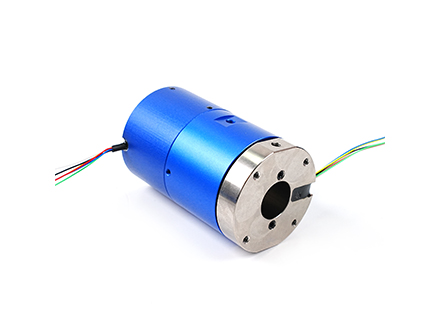
1. Main Components of an Electrical Swivel Joint
Although the internal structure varies between models, a typical electrical swivel joint may include several key components.
Rotating Part
The rotating part is connected to the moving section of the equipment. It rotates relative to the stationary housing while maintaining the required electrical connections.
Stationary Housing
The stationary housing is mounted to the fixed structure of the machine. It protects the internal components and provides the required mechanical interface for installation.
Conductive Contacts
Conductive contacts provide the electrical path between the rotating and stationary sides. Depending on the design, these contacts may use sliding contact structures or other specialized transmission methods.
Insulating Components
Insulating materials separate individual electrical circuits and help prevent unintended electrical contact. Proper insulation is particularly important when the product contains multiple circuits or operates at different voltage levels.
Bearing or Rotational Support Structure
Some electrical swivel joint designs incorporate bearings or other mechanical support components to facilitate rotation. The specific structure depends on the product's mechanical requirements and intended application.
2. How Electrical Transmission Takes Place
The working process of an electrical swivel joint can be understood through a simple sequence.
Electrical input: Power or electrical signals enter the stationary or rotating side of the joint through designated terminals.
Contact connection: Internal conductive components maintain an electrical path between the two sides.
Relative rotation: The rotating section moves while the internal contact structure continues to support electrical transmission.
Electrical output: Power or signals are delivered to the connected equipment on the opposite side.
This process allows electrical connections to remain functional without requiring the external cable to rotate together with the moving assembly.
3. The Role of Sliding Electrical Contacts
In many rotary electrical transmission products, sliding contacts are used to maintain electrical continuity during rotation.
These contacts are designed to remain electrically connected while moving relative to one another. Depending on the contact materials and construction, the design may support different current ratings, rotational speeds, and operating lifetimes.
Contact resistance, wear, electrical noise, and heat generation are important considerations when evaluating a sliding-contact design.
For applications involving sensitive signals or demanding operating conditions, the contact technology should be selected according to the specific electrical and mechanical requirements.
4. How an Electrical Swivel Joint Handles Multiple Circuits
Many electrical swivel joints are designed to transmit more than one electrical circuit. Separate conductive paths and insulating structures allow multiple power or signal channels to operate within the same assembly.
For example, one circuit may be used for power transmission while other circuits carry control signals or sensor connections.
The number of circuits, current rating, voltage rating, and circuit arrangement depend on the product design. Engineers should confirm these specifications before integrating the joint into a machine.
5. How Rotation Affects Electrical Performance
Rotation can affect the mechanical and electrical performance of an electrical swivel joint. Contact friction, mechanical wear, rotational speed, and operating temperature may influence long-term reliability.
In sliding-contact designs, repeated rotation may gradually affect contact surfaces. Appropriate materials, structural design, and manufacturing quality can help support stable electrical performance.
For continuous-rotation applications, buyers should pay attention to rated speed, expected service life, contact resistance, and the manufacturer's testing conditions.
6. Electrical Swivel Joint vs. Conventional Cable Connection
A conventional cable connection is suitable when the connected components remain stationary or only move within a limited range.
However, when a component rotates continuously or repeatedly, a fixed cable may become twisted or experience mechanical stress.
An electrical swivel joint provides an alternative connection method by allowing relative rotation while maintaining electrical transmission.
| Feature | Conventional Cable | Electrical Swivel Joint |
|---|---|---|
| Stationary connection | Suitable | Suitable |
| Continuous rotation | Requires specialized cable management | Designed for applicable rotating connections |
| Repeated twisting | May increase cable wear | Can reduce the need for cable twisting |
| Multiple circuits | Possible with suitable wiring | Available in multi-circuit configurations |
| Installation requirements | Depends on cable routing | Requires compatible mechanical mounting |
The actual suitability of either solution depends on the movement, electrical load, operating environment, and equipment design.
7. Factors That Affect Electrical Swivel Joint Performance
Several factors can influence the performance of an electrical swivel joint:
Contact material: Influences conductivity, wear resistance, and contact stability.
Contact resistance: Affects electrical losses and signal transmission quality.
Rotational speed: Determines the mechanical demands placed on the internal components.
Current and voltage: Must remain within the product's rated operating limits.
Environmental conditions: Dust, moisture, temperature, and vibration may affect operation.
Mechanical alignment: Proper installation helps reduce unnecessary mechanical stress.
Manufacturing quality: Consistent assembly and inspection can support reliable performance.
8. What Should You Check Before Choosing an Electrical Swivel Joint?
Before purchasing an electrical swivel joint, engineers and industrial equipment manufacturers should review the following specifications:
Number of circuits and circuit arrangement
Rated current and voltage
Maximum operating speed
Contact resistance
Electrical insulation performance
Rotational direction and duty cycle
Mounting dimensions and connection type
Operating temperature and environmental protection
Service life and testing requirements
For customized industrial equipment, an experienced electrical swivel joint manufacturer may be able to provide suitable structural modifications or electrical configurations based on the project requirements.
An electrical swivel joint works by maintaining a conductive connection between rotating and stationary components. Through its internal contact structure and mechanical design, it allows power or electrical signals to pass across a rotating interface.
Its performance depends on the contact technology, materials, electrical specifications, rotational speed, and operating environment. Selecting a suitable product requires a clear understanding of the equipment's mechanical movement and electrical transmission requirements.
Need an electrical swivel joint for your rotating equipment? Contact our team to discuss your application, technical specifications, and OEM customization requirements.