Information
Focus on RHD Precision Industry - Get to know the new information of the industry quickly!


Focus on RHD Precision Industry - Get to know the new information of the industry quickly!
2026-06-16 16:15:02
A rotary union is a precision mechanical device designed to transfer fluids,gases,steam,vacuum,or thermal oil from a stationary source to a rotating component while maintaining a sealed connection.Also known as a rotary joint,Rotary Unions are essential in many industrial systems where rotating machinery requires a continuous supply of media without leakage.
From printing presses and packaging machines to steel mills and wind turbines,Rotary Unions play a critical role in ensuring efficient and reliable operation.Their ability to transmit media across rotating interfaces makes them indispensable in modern manufacturing and automation industries.
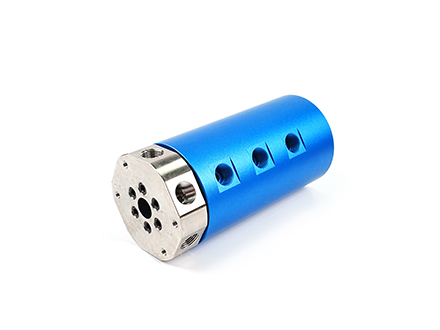
A Rotary Union is a sealing device installed between stationary piping and rotating equipment.It allows liquids or gases to pass into or out of a rotating shaft,drum,roll,or spindle while preventing leakage.
In simple terms:
A rotary union creates a leak-free connection between a fixed supply line and a rotating machine component.
Without rotary unions,it would be difficult to continuously supply cooling water,hydraulic oil,compressed air,steam,or other media to rotating machinery.
The working principle of a rotary union is based on maintaining a dynamic seal between stationary and rotating parts.
The housing of the rotary union is connected to a fixed supply line carrying the fluid or gas.
The rotor portion is attached to the rotating shaft or equipment.
Media enters through the stationary inlet and travels through internal channels to the rotating component.
Special sealing surfaces maintain a tight seal while allowing continuous rotation.
As the equipment rotates,the rotary union ensures uninterrupted media flow without twisting hoses or causing leaks.
This design enables reliable operation even at high speeds,temperatures,and pressures.
A typical rotary union consists of several critical components:
The stationary outer body connected to the fluid supply.
The rotating component attached to the machine shaft.
Precision sealing surfaces that prevent media leakage during rotation.
Support smooth rotation and minimize friction.
O-Rings and Secondary Seals
Provide additional sealing protection.
Internal channels that direct the fluid or gas through the union.
Rotary unions are available in various designs depending on the application and media being transferred.
Contains one flow channel.
Commonly used for:
Water cooling
Air transfer
Hydraulic systems
Features two separate flow paths.
Suitable for:
Simultaneous supply and return lines
Heating and cooling circuits
Contains multiple independent channels.
Used in:
Complex automation systems
Multi-function machinery
Advanced manufacturing equipment
Combines fluid transfer with electrical signal transmission.
Applications include:
Automated equipment
Robotics
Packaging systems
Designed for high RPM applications such as machine tool spindles and CNC equipment.
Rotary unions can handle a wide variety of media,including:
Used for cooling and temperature control systems.
Common in paper mills,textile processing,and drying equipment.
Used in high-temperature industrial heating systems.
Frequently used in automation and pneumatic equipment.
Provides power transmission in hydraulic systems.
Supports vacuum processing applications.
Used in CNC machining and metalworking operations.
High-quality seals prevent media loss and contamination.
Allows uninterrupted fluid transfer during equipment operation.
Many models can handle steam and thermal oil applications.
Designed for low-pressure to high-pressure systems.
Engineered with durable materials for demanding industrial environments.
Continuous media transfer supports stable machine performance.
Reliable sealing systems minimize downtime and leakage issues.
Compact designs eliminate the need for complex hose arrangements.
Prevents fluid leaks that could create hazardous conditions.
Compatible with various fluids,gases,pressures,and temperatures.
Rotary unions supply cooling water and air to rotating printing cylinders.
Used to transfer steam and condensate in paper machine dryers.
Supports temperature control in extrusion and molding equipment.
Provides cooling and lubrication for rolling mills and processing machinery.
Transfers air and vacuum in automated packaging systems.
Used in drying,heating,and fabric processing equipment.
Supplies coolant through rotating spindles to improve machining efficiency.
Wind turbines use rotary unions to transfer hydraulic fluids and lubrication media.
| Feature | Rotary Union | Slip Ring |
|---|---|---|
| Main Function | Transfer fluids or gases | Transfer electrical power/signals |
| Media Type | Liquid, gas, steam | Electrical current/data |
| Sealing Requirement | Critical | Not required |
| Common Industries | Manufacturing, processing | Automation, robotics |
Although both operate in rotating systems,they serve different purposes.
| Feature | Rotary Union | Swivel Joint |
|---|---|---|
| Rotation Type | Continuous rotation | Limited rotation or hose movement |
| Sealing Precision | High | Moderate |
| Industrial Applications | Complex machinery | Fluid handling systems |
| Operating Speed | High RPM capable | Generally lower speeds |
Rotary unions are designed specifically for high-speed rotating equipment.
When selecting a rotary union,consider the following factors:
Determine whether the system uses water,steam,oil,air,or vacuum.
Ensure the union can safely handle system pressure.
Verify compatibility with operating temperatures.
Match the union's RPM rating to machine requirements.
Choose single,dual,or multi-passage designs as needed.
Select seal materials suitable for the media and environment.
Ensure compatibility with piping and shaft configurations.
Modern industrial equipment increasingly relies on rotating systems that require constant fluid or gas transfer.Rotary unions solve this challenge by providing:
Continuous operation
Reliable sealing
Improved productivity
Reduced maintenance costs
Enhanced process efficiency
Without rotary unions,many manufacturing processes would require more complex and less reliable solutions.
A rotary union transfers fluids or gases between stationary piping and rotating equipment while preventing leakage.
Yes.The terms rotary union and rotary joint are often used interchangeably in industrial applications.
Common media include water,steam,compressed air,hydraulic oil,thermal oil,vacuum,and industrial coolants.
Service life depends on operating conditions,media type,pressure,speed,and maintenance practices.High-quality rotary unions can operate for many years under proper conditions.
Rotary unions are widely used in paper manufacturing,printing,plastics processing,packaging,metalworking,textile production,automation,and renewable energy industries.

Phone: +86 13622631318
Email:info@reehonde.com
Add: Room 301, Building 1, No. 11, Dalingshan Lakeside South 1st Street, Dalingshan Town, Dongguan City, Guangdong Province, China
Copyright © 2026 Dongguan Rui-Hong-De Precision Industry Co., Ltd All rights reserved. Privacy policy | Terms and Conditions


