Information
Focus on RHD Precision Industry - Get to know the new information of the industry quickly!


Focus on RHD Precision Industry - Get to know the new information of the industry quickly!
2025-12-24 11:06:36
Rotary Unions are essential components in many industrial and high-tech systems, providing a reliable connection between stationary and rotating parts. Whether used to transfer fluids, electrical signals, or data, rotary unions enable continuous motion while maintaining efficiency, safety, and performance.
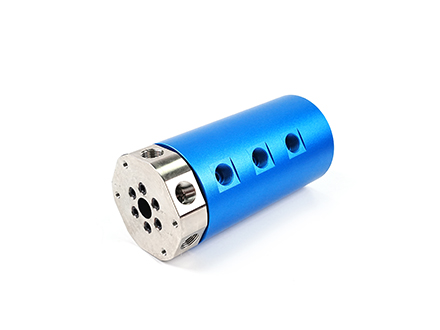
In this article, we explore what a rotary union is used for, its various types—including fiber optic rotary joints, Rotary Slip Rings, rotary couplings, and electrical rotary joints—and the industries and applications where these versatile components play a critical role.
A rotary union (also called a rotating joint or rotary coupling) is a mechanical device that allows the transfer of media—such as liquid, gas, or electrical signals—between stationary and rotating components. These unions are essential in systems where rotation is required, yet uninterrupted media flow must be maintained.
Key functions include:
Fluid transfer: oil, water, coolant, or steam
Electrical signal transmission: power, data, or control signals
Optical signal transmission: for fiber optic systems
Multi-channel integration: combining fluids, electricity, and optical signals
By allowing rotation without leaks or signal loss, rotary unions are critical in ensuring machine uptime, precision, and safety.
The standard rotary union transfers fluids such as oil, water, hydraulic fluids, or steam between a stationary source and a rotating device. They are widely used in industrial machinery and manufacturing equipment.
Typical applications:
Paper, textile, and printing machinery
Steel and aluminum rolling mills
Plastic molding machines
Hydraulic systems
These unions are designed to withstand high pressures, temperatures, and rotational speeds, ensuring continuous operation in demanding industrial environments.
A fiber optic rotary joint is a specialized type of rotary union that allows optical signals to pass between a stationary fiber optic cable and a rotating system. These are widely used in high-speed communication, radar systems, and precision measurement equipment.
Applications:
Industrial robotics requiring optical sensors
Aerospace and defense systems
Medical imaging and scanning devices
Advanced optical communication systems
Fiber optic rotary joints are designed to maintain signal integrity, minimal insertion loss, and low crosstalk, making them critical for applications requiring high-speed data transfer.
A rotary slip ring (sometimes called a fiber optic slip ring when used for optical signals) is an electrical rotary joint that allows electrical signals or power to pass through a rotating interface. Slip rings are essential in devices that rotate continuously but require uninterrupted electrical connectivity.
Applications:
Wind turbines for transferring power and signals from the rotating blades
Industrial automation systems and robotic arms
Radar antennas and rotating communication devices
Packaging and textile machinery
Slip rings can handle both low-voltage signal transmission and high-power applications, ensuring reliable operation in critical systems.
A Through Bore Rotary Union has a central hollow section (through bore) that allows additional components such as shafts, optical fibers, or hydraulic lines to pass through while the union rotates. This type of rotary union is highly versatile and widely used in multi-functional machinery.
Applications:
Machine tools and CNC machines
Spindle cooling systems
Hydraulic and pneumatic actuation systems
High-speed rotating equipment
The through bore rotary union enables complex multi-channel operations without interfering with rotational movement.
A spinner rotary joint is designed for high-speed rotation in machinery such as centrifuges, rotating instruments, and testing equipment. These unions can handle fluids, electrical signals, or optical signals while maintaining stability at high RPMs.
Applications:
Laboratory centrifuges and test rigs
Aerospace testing equipment
High-speed industrial machinery
Spinner rotary joints are engineered to withstand centrifugal forces and minimize wear during rapid rotation.
Rotary unions are used in virtually every industry that involves rotation, including:
Industrial Manufacturing
Transferring cooling liquids, hydraulic fluids, or compressed air to rotating machinery
Machines like spindle systems, roll mills, and printing presses
Aerospace & Defense
Using fiber optic rotary joints for high-speed data and signal transfer
Radar systems and satellite communication equipment
Medical Equipment
Imaging devices, surgical robots, and diagnostic machines use rotary slip rings and fiber optic slip rings for precise signal transmission
Renewable Energy
Wind turbines rely on rotary unions and electrical rotary joints to transmit power and control signals from rotating blades to stationary systems
Automotive & Robotics
Robotic arms, automated production lines, and testing rigs use rotary couplings and rotary unions for fluid, air, or electrical transfer
The main benefits of using rotary unions include:
Continuous Operation: They allow machines to operate 24/7 without manual intervention.
Leak Prevention: Prevent fluid or signal leaks during rotation.
Precision and Reliability: Ensure accuracy in both industrial and high-tech systems.
Versatility: Can handle fluids, electrical power, or optical signals, sometimes simultaneously.
Reduced Maintenance: Properly designed rotary unions minimize downtime and wear.
High-performance systems often integrate rotary couplings with fiber optic rotary joints or electrical rotary joints to achieve multi-functional capabilities.
When selecting a rotary union, consider the following factors:
Media Type: Fluid, electrical, or optical
Rotation Speed: Some applications require high-speed spinner rotary joints
Number of Channels: Single or multi-channel unions for complex systems
Pressure and Temperature Ratings: Ensure compatibility with hydraulic or steam systems
Material: Stainless steel, aluminum, or custom alloys for corrosion resistance and durability
Mounting Requirements: Through bore vs. standard mounting
Professional manufacturers offer custom solutions that combine multiple functionalities, such as fiber optic slip rings integrated with hydraulic rotary couplings.
To maximize the life of a rotary union:
Regular Inspection: Check seals, bearings, and connectors
Lubrication: Ensure proper lubrication for mechanical parts
Cleanliness: Keep fluids clean to prevent contamination
Temperature Control: Avoid overheating in high-speed applications
Alignment: Ensure proper installation to prevent wear
Proper maintenance prolongs service life and ensures reliable operation in demanding industrial environments.
A rotary union is an essential component in modern machinery, enabling the transfer of fluids, electrical signals, or optical data between stationary and rotating systems. From fiber optic rotary joints in aerospace applications to rotary slip rings in wind turbines and through bore rotary unions in CNC machines, these devices are critical for efficiency, precision, and safety.
By understanding the types of rotary unions—including spinner rotary joints, electrical rotary joints, and rotary couplings—and their applications, engineers and manufacturers can choose the right solution for their systems. Proper selection, installation, and maintenance ensure long-term performance and reliability, making rotary unions indispensable in industries ranging from industrial manufacturing to medical equipment, aerospace, renewable energy, and robotics.

Phone: +86 13622631318
Email:info@reehonde.com
Add: Room 301, Building 1, No. 11, Dalingshan Lakeside South 1st Street, Dalingshan Town, Dongguan City, Guangdong Province, China
Copyright © 2026 Dongguan Rui-Hong-De Precision Industry Co., Ltd All rights reserved. Privacy policy | Terms and Conditions


