Information
Focus on RHD Precision Industry - Get to know the new information of the industry quickly!


Focus on RHD Precision Industry - Get to know the new information of the industry quickly!
2025-12-04 10:33:20
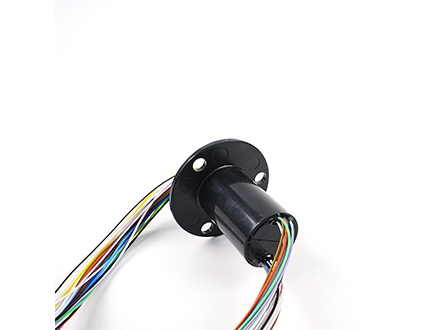
In the field of electromechanical energy conversion, one frequently asked question is: Does a DC generator have slip rings? Understanding this requires exploring how DC generators work, the difference between slip rings and commutators, and the broader role of devices such as electrical slip rings, Rotary Slip Rings, and electrical Rotary Unions across industries.
The simple answer is:
Slip rings are used mainly in AC generators (alternators) to transfer the alternating current from the rotating armature to the stationary output terminals.
In contrast, a DC generator requires the current to be rectified into direct current. Therefore, it uses a split-ring commutator rather than continuous slip rings. The commutator continuously reverses coil connections to ensure the output remains unidirectional.
Although both are used in rotating electrical machines, they serve different purposes.
Continuous ring structure
Provide a constant electrical connection
Do NOT rectify current
Used in AC generators, wind turbines, robotics, packaging machines, medical equipment
Can be part of electrical slip ring, Rotary Slip Ring, or Capsule Slip Rings assemblies
Segmented ring (split ring)
Switches coil polarity to produce DC
Essential for DC generators and traditional brushed DC motors
So, while AC machines rely on a continuous electrical path, a DC generator depends on mechanical switching.
A DC generator must convert alternating voltage (generated inside the armature) into direct current. Slip rings cannot accomplish this.
Commutators physically reverse the connection of the armature coils at the correct time, ensuring the external circuit receives only positive voltage.
Slip rings would result in alternating current output, which is not suitable for DC-operated loads.
Slip rings offer low friction and stable contact, while commutators are designed for switching—something slip rings cannot do.
Because of these technical reasons, DC generators universally use commutators.
Although a DC generator does not use slip rings, slip ring technology is essential in many other rotating systems.
A slip ring is an electrical component that transmits:
Power
Electrical signals
Data
Control signals
between a stationary structure and a rotating part.
Modern slip rings include:
Used in industrial machinery, packaging lines, and automation equipment.
Handles power + signal transmission in rotating platforms such as antennas, cranes, and radar systems.
Miniature slip rings used in small devices, CCTV cameras, robots, and precision instruments.
Combines electrical slip ring + fluid rotary union for transmitting power, signals, air, coolant, or hydraulic fluid simultaneously.
A newer generation of slip rings that uses non-contact methods for ultra-long life applications.
Slip rings allow rotation without twisting wires—critical in continuous motion equipment.
Even though DC generators do not use slip rings, industries rely heavily on various slip ring designs:
Small, compact, and lightweight
Ideal for:
CCTV surveillance
Robotics
Medical imaging devices
VR equipment
Gimbal systems
They provide stable signal transmission and low electrical noise.
General-purpose slip rings used for transmitting:
Power
Signals
Data (Ethernet, CAN bus, RS485)
Found in industrial control systems and rotating assemblies.
High-load versions used in:
Radar systems
Industrial cranes
Wind turbine pitch control
Marine equipment
Heavy rotating platforms
They can handle higher voltage and current levels.
Also called an electro-fluid slip ring
Transmits both:
Electrical power/signals
Fluids (oil, coolant, compressed air)
Widely used in CNC machinery, automation systems, and medical equipment.
Advanced slip rings that use magnetic or optical coupling.
Features:
No physical brushes
Zero wear
Ultra-long lifespan
Suitable for high-speed rotation and 24/7 operation
Used in high-precision systems such as aerospace and defense devices.
Slip rings play a vital role in modern rotating systems. Their importance includes:
Enable continuous 360° rotation without tangled wires.
Ensure smooth power delivery and accurate data transfer.
Modern slip rings, especially brushless slip rings, provide long service life for continuous-operation devices.
They support:
Ethernet
Profibus
RS485
High-frequency signals
Robotic joints depend on compact slip rings for unrestricted movement.
Slip rings are indispensable in advanced engineering environments.
Reason:
AC generators produce alternating current directly
No need for polarity switching
Slip rings efficiently transfer the AC output to the external circuit
Wind turbines, for example, use large rotary slip rings to transmit power and signals from the rotating nacelle to the stationary tower.
| Generator Type | Slip Rings | Commutator | Output Type |
|---|---|---|---|
| DC Generator | No | Yes | DC |
| AC Generator (Alternator) | Yes | No | AC |
A DC generator uses a commutator, not slip rings.
Slip rings are essential in many modern rotating devices but serve different purposes.
While a DC generator does not use slip rings, slip ring technology remains crucial across countless modern industries—from robotics and medical devices to wind turbines and industrial automation.
Whether it is:
capsule slip rings for compact devices
electrical slip rings for industrial equipment
rotary slip rings for heavy-duty operations
electrical rotary unions for mixed media transfer
or brushless slip rings for long-life precision systems
Slip rings remain one of the most important components in any device where rotation and electrical transmission must occur simultaneously.

Phone: +86 13622631318
Email:info@reehonde.com
Add: Room 301, Building 1, No. 11, Dalingshan Lakeside South 1st Street, Dalingshan Town, Dongguan City, Guangdong Province, China
Copyright © 2026 Dongguan Rui-Hong-De Precision Industry Co., Ltd All rights reserved. Privacy policy | Terms and Conditions


